
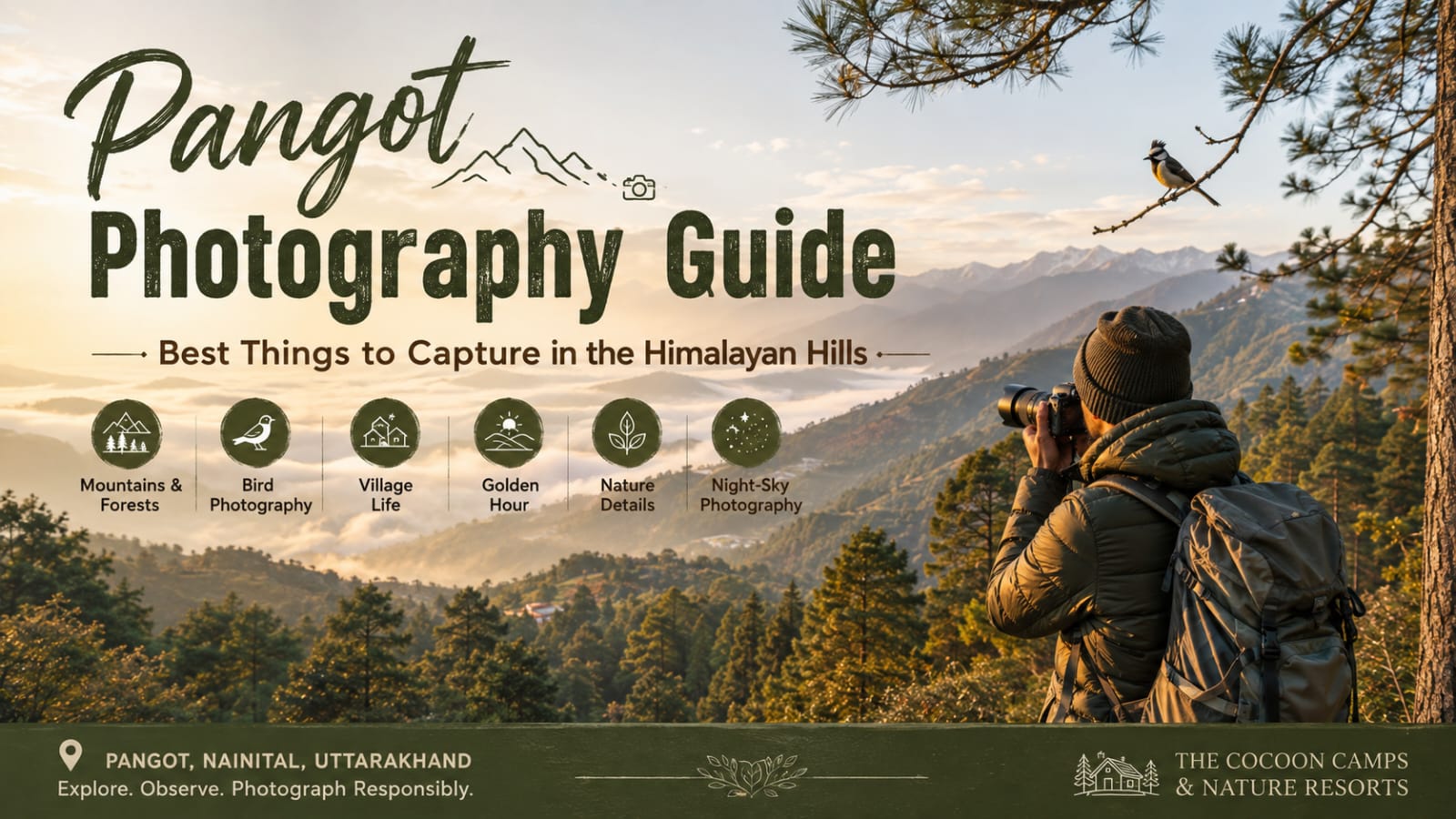
Pangot Photography Guide: Best Things to Capture in the Himalayan Hills
Pangot is a rewarding destination for travellers who want to photograph more than a conventional tourist view. Its Himalayan surroundings offer changing mountain light, forests, mist, birds, village life and small natural details that can turn an ordinary walk into a memorable photography session. This Pangot photography guide explains what to look for, when to photograph it and how to capture the landscape responsibly.
Why Pangot Is Interesting for Photography
The appeal of photography in Pangot comes from variety. The landscape can look completely different depending on the time of day and weather. Clear conditions may reveal layers of hills, while clouds and mist create softer, more atmospheric photographs.
Forests provide natural framing, textures and changing shades, while village surroundings can add a human element to your travel photographs.
You also do not need expensive equipment. A smartphone can produce excellent images with careful composition, while a dedicated camera gives you greater control over lenses, exposure and distant subjects.
Pangot Landscape Photography: Mountains and Forests
For Pangot landscape photography, look beyond a single wide mountain panorama. Try creating depth by combining a nearby branch or tree with forested slopes and distant hills.
Experiment with:
- Overlapping mountain ridges
- Tree silhouettes
- Forest paths
- Branches framing the landscape
- Tree bark and natural textures
- Patterns created by hills and vegetation
Keep your horizon level and change your position before taking the photograph. A few steps to the side or a lower camera angle can create a much stronger composition.
Forests, Mist and Clouds
Weather can become one of your best photographic subjects. Mist can soften distant hills and create layers, while clouds can add movement and atmosphere to an otherwise simple landscape.
Overcast conditions can also be useful for forest photography because softer light reduces harsh shadows.
When fog appears, simplify your composition. A single tree, fading mountain ridge or textured branch may create a stronger image than trying to capture the entire landscape.
Protect your camera or smartphone from moisture and avoid exposed areas during unsafe weather.
Pangot Bird Photography
Pangot is known as a birding destination, making it particularly interesting for nature photographers. For Pangot bird photography, patience is more useful than chasing a subject.
Use a longer lens when available and observe before taking photographs. Keep a respectful distance, move quietly and allow birds to behave naturally.
Never use food or playback recordings to attract birds, and do not approach nests or breeding areas. The goal should be to photograph natural behaviour without disturbing the subject.
Village Life and Local Surroundings
Some of the most meaningful travel photographs are found away from traditional landscapes. Look for paths, traditional structures, agricultural details, doors, textures and everyday scenes that reflect the character of the area.
If people are recognisable, ask permission before taking or publishing their portraits. Be especially respectful around homes, private spaces and children.
Instead of photographing people simply as background subjects, try an environmental portrait or capture a small visual story about everyday life.
Sunrise, Golden Hour and Mountain Light
Early morning can provide soft light and quieter surroundings, while late afternoon brings warmer tones and longer shadows.
Instead of taking one photograph and leaving, watch how sunlight gradually changes the landscape. Trees, hills and clouds can look completely different a short while later.
During golden hour, experiment with silhouettes, backlighting and warm foreground details. Remember that sunrise and sunset colours depend on atmospheric conditions, so dramatic colours are never guaranteed.
Macro and Nature Details
Not every photograph needs to show a mountain.
Look closely at flowers, leaves, moss, bark, stones, water droplets and other natural textures. These small subjects can create a completely different visual record of the Himalayan environment.
A macro lens is useful but not essential. Smartphone close-up modes can also work well in suitable light.
Avoid picking flowers, moving natural objects or damaging vegetation simply to improve a composition.
Night-Sky and Star Photography
When conditions are favourable, Pangot may offer opportunities for night-sky photography. Results depend on cloud cover, moonlight and surrounding artificial light.
A tripod is useful for keeping the camera steady during longer exposures. Focus carefully, take test photographs and consider including a safe foreground element such as a tree or structure.
Do not enter unfamiliar terrain at night just to find a better composition. Safety should always come before photography.
Smartphone Photography Tips for Pangot
You can create strong Pangot nature photography images with a smartphone.
Before shooting, clean the camera lens. Use the grid to help with composition and keep horizons straight. When the sky is much brighter than the foreground, tap the screen to adjust exposure.
Avoid excessive digital zoom because it can reduce image quality. Use the main camera and crop later where possible.
Portrait mode can work well for people and close subjects, but check the edges carefully because artificial background blur can sometimes affect branches and fine details.
For important moments, take several frames. Small changes in focus, movement and light can make a noticeable difference.
Beginner Camera Settings and Practical Tips
For landscapes, a moderate aperture can help keep more of the scene sharp. For birds, a faster shutter speed is generally useful because subjects can move suddenly. For close-ups, focus carefully on the most important detail.
If your camera supports RAW, consider using it for important photographs because RAW files provide greater flexibility during editing.
Carry spare batteries, memory cards and a cleaning cloth. A lightweight tripod can also be useful for landscapes and night photography.
Best Photography Experiences Throughout the Day
Early morning: Birds, soft light and changing mountain scenery.
Late morning: Forest details, village surroundings and close-up photography.
Afternoon: Textures, clouds, trees and architectural details.
Golden hour: Warm light, silhouettes and layered landscapes.
Night: Stars and atmospheric scenes when weather and visibility permit.
This variety makes photography in Pangot suitable for both planned photography sessions and spontaneous moments.
Practical Tips for Himalayan Terrain
Photography can make you concentrate so closely on your subject that you forget the terrain around you.
Wear suitable footwear, watch your footing and never walk backwards while looking through a camera or phone screen. Protect electronics from sudden rain and moisture.
Do not block roads or paths while taking photographs. Stay aware of vehicles, other travellers and local surroundings, and never enter restricted or private areas for a photograph.
A Convenient Base for Photography
Travellers planning several photography sessions may prefer a convenient base from which to explore the area.
The Cocoon Camps & Nature Resorts in Pangot is one possible base for travellers combining photography with a stay in the hills. However, the focus of your trip can remain on exploring, observing and photographing the surroundings rather than rushing between attractions.
Responsible Nature Photography
Good photography begins with respecting the environment.
Stay on appropriate paths, avoid damaging vegetation and never remove natural objects for photographs. Do not disturb birds or other wildlife for a better frame.
When photographing local people, ask permission where appropriate and respect private spaces.
The best photographs often come from patience: waiting for the right light, observing natural behaviour and working with the conditions rather than trying to control them.
Conclusion
Pangot photography is about seeing the Himalayan surroundings from different perspectives. Mountains, forests, mist, birds, village details, flowers, changing light and clear night skies can all become part of a varied visual story.
Whether you carry a smartphone or a professional camera, slow down, observe carefully and photograph responsibly. You may return with not just scenic photographs, but a more detailed visual memory of Pangot.
FAQs About Pangot Photography
1. Is Pangot good for photography?
Yes. Pangot offers opportunities for landscape, bird, nature, macro, village and atmospheric photography.
2. What can I photograph in Pangot?
You can photograph mountains, forests, birds, clouds, mist, flowers, leaves, natural textures and local surroundings. Night-sky photography may also be possible when conditions are suitable.
3. Do I need a DSLR for Pangot photography?
No. A smartphone can produce very good travel photographs when you use composition, exposure and natural light effectively.
4. Is Pangot suitable for bird photography?
Yes, Pangot is known as a birding destination. However, sightings are not guaranteed, so patience and responsible observation are important.
5. What is the best time for photography in Pangot?
Early morning and late afternoon can provide interesting natural light, while different photographic subjects are available throughout the day.
6. Can I photograph stars in Pangot?
Potentially, if the sky is clear and moonlight or artificial light does not interfere. Conditions vary.
7. How can I photograph birds without disturbing them?
Keep your distance, avoid chasing or cornering birds, do not use playback or food to attract them, and allow them to behave naturally.
For More Details :
Call or Whatsapp : 9339330090
email: Thecocoon18@gmail.com
website :https://offers.thecocoonresort.com/