
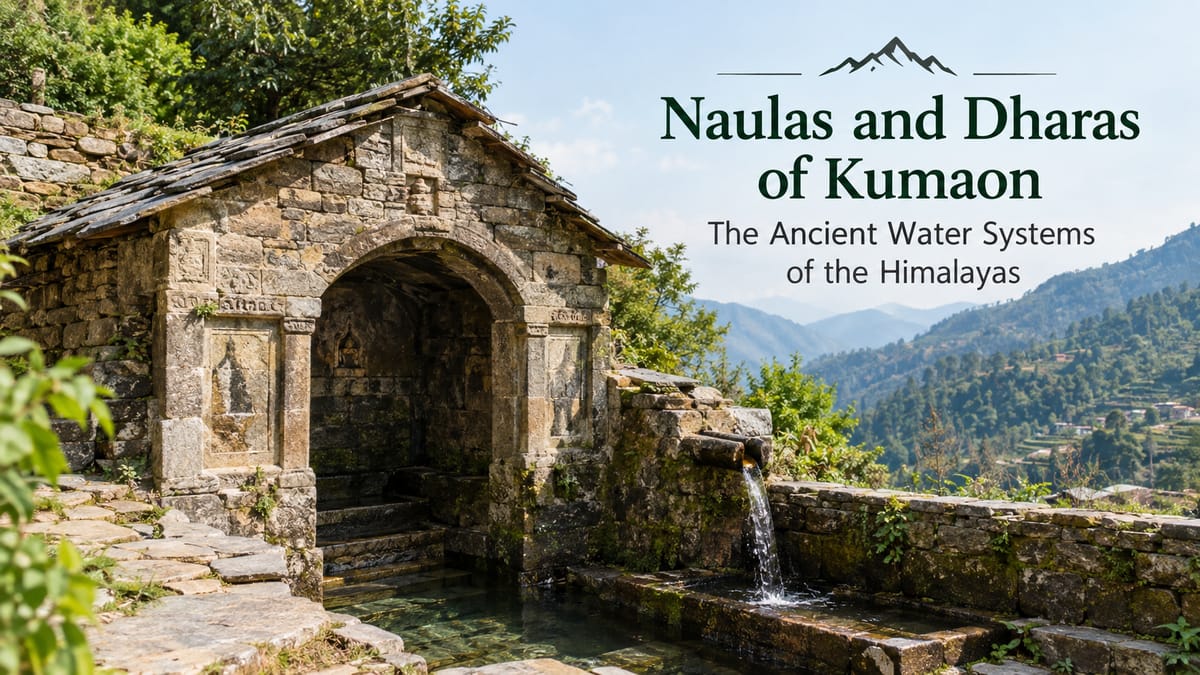
Naulas and Dharas of Kumaon: The Ancient Water Systems of the Himalayas
Introduction: Where Water and Mountain Life Meet
In the Kumaon Himalayas, water has always meant more than survival. It has shaped villages, influenced daily routines and become an inseparable part of local traditions. Long before modern pipelines reached remote mountain settlements, communities depended on natural springs and carefully built structures to collect and protect their drinking water.
Among the most remarkable examples are the Naulas and Dharas of Kumaon. These traditional water sources reflect generations of knowledge about the land, groundwater and the delicate relationship between people and nature. Built around natural water flows, they demonstrate how Himalayan communities developed practical solutions to living in a mountainous environment.
Today, as many parts of Uttarakhand face growing water stress, these ancient structures deserve renewed attention. They are not merely remnants of the past; they offer valuable lessons in water conservation, community responsibility and sustainable living.
Naulas and Dharas of Kumaon: Traditional Water Systems
Although both are associated with natural springs, naulas and dharas differ in their physical structure and the way people access water.
Naulas: Traditional Stone-Built Water Reservoirs
A naula is a traditional, often covered, stone-built water structure designed to collect and store water from groundwater seepage or a natural spring. Naulas are particularly associated with the Kumaon region of Uttarakhand.
Many resemble small, enclosed stepwells or shrine-like structures. Steps or a descending entrance allow people to reach the water level, while stone walls and protective roofing help shelter the source from direct exposure to the surroundings.
Their designs vary from simple functional structures to elaborately carved examples reflecting local craftsmanship. By protecting spring water within a defined space, naulas helped communities access a dependable source of water for everyday needs.
Dharas: Water Flowing Directly from Springs
A dhara is generally a natural spring whose water emerges through an outlet, often shaped or protected with stonework. Unlike a naula, which commonly collects water within a covered reservoir, a dhara allows water to flow out through a spout or channel.
Villagers may collect water in vessels beneath the outlet, making it convenient for daily use.
The exact construction of both systems varies from place to place. Their underlying principle, however, is similar: work with the natural movement of groundwater instead of relying entirely on large, engineered supply systems.
Together, these traditional water systems of Kumaon demonstrate how local communities adapted their designs to the terrain and the availability of springs.
A Living History of Kumaon Heritage
Naulas and dharas developed within a wider tradition of community-managed water harvesting in the Himalayan region. Historical accounts and studies of traditional architecture describe water structures built by local rulers, wealthy patrons and communities over generations.
It would be misleading to assign every naula or dhara a single origin date. Their histories differ, and many surviving structures have been modified or maintained over time.
What remains consistent is their importance in village life.
For generations, people visited these water sources to collect drinking water and carry it home. The daily journey often brought neighbours together, creating opportunities for conversation and strengthening community relationships.
Some structures also held religious significance. Water was treated with respect, and certain naulas incorporated sacred imagery or architectural features associated with local beliefs. Such practices reinforced the idea that a shared water source was something to protect rather than exploit.
This connection between utility, faith and community makes the Naulas and Dharas of Kumaon an important part of the cultural heritage of Kumaon.
Traditional Himalayan Architecture and Local Knowledge
The beauty of a naula often lies in its simplicity. Local stone, careful masonry and an understanding of the surrounding landscape come together to create a structure that serves a practical purpose while reflecting regional craftsmanship.
Some traditional naulas feature carved stone panels, ornamental entrances and sloping roofs. Their proportions and detailing can resemble small temples, although the design varies across locations.
Their construction also required knowledge that extended beyond architecture. Builders needed to identify suitable water sources, understand how groundwater reached the site and choose a location where the structure could collect water without unnecessarily disturbing its flow.
Maintenance was equally important. Blocked drainage, damaged masonry or contamination around the source could affect its usefulness. Keeping these structures functional therefore depended on continued local attention.
This combination of craftsmanship, observation and collective care is one of the most valuable aspects of traditional Himalayan architecture. It reminds us that sustainable design is not always about building something bigger; sometimes, it means understanding a landscape well enough to work with it.
Why These Ancient Water Sources Matter Today
Supporting Local Water Security
The Himalayan landscape may receive substantial rainfall in some seasons, but water availability is not always consistent throughout the year. Steep slopes, changing weather patterns and differences in local geology influence how much water enters and remains within the ground.
Springs depend on groundwater recharge, which is affected by rainfall, soil conditions, vegetation and the underlying geology.
When a spring remains healthy, a naula or dhara can provide an accessible source of water for a nearby community. However, these structures cannot independently solve every modern water shortage. Their effectiveness depends on the condition of the spring and the landscape that feeds it.
Protecting Springs and the Surrounding Ecosystem
The health of a water source is closely linked to its surroundings. Forest degradation, construction, poorly managed drainage and changes in land use can affect groundwater recharge and spring flows.
Protecting a naula or dhara must therefore involve more than repairing its stonework. It also means safeguarding the surrounding catchment, maintaining vegetation where appropriate and monitoring water quality.
Traditional water systems can complement modern water management, especially when local knowledge is combined with scientific assessment, careful restoration and reliable sanitation practices.
In a period of changing rainfall patterns and increasing pressure on mountain resources, this integrated approach is particularly important.
The Challenges Facing Naulas and Dharas
Despite their historical importance, many traditional water sources face neglect, deterioration and declining use.
Modern piped water supplies have changed daily routines in numerous villages. While these systems can improve access to drinking water, they may also reduce the everyday role of older structures. Without regular maintenance, traditional sources can gradually become damaged or forgotten.
Other challenges include:
– Reduced spring discharge: Changes in rainfall, groundwater recharge and land use can affect water availability.
– Physical deterioration: Cracked masonry, damaged roofs and blocked drainage can compromise a structure.
– Pollution risks: Waste disposal, animal access and inadequate sanitation near a source can affect water quality.
– Loss of traditional knowledge: Younger generations may have fewer opportunities to learn how these structures were built and maintained.
Restoration should begin with understanding the individual site. Local residents, conservation specialists, engineers and relevant authorities can work together to assess the structure, investigate its water source and determine appropriate repairs.
Importantly, water intended for drinking should be tested and treated as necessary. The historical reputation of a spring does not automatically guarantee that its water is safe today.
Exploring Kumaon Through Responsible Tourism
For travellers, discovering the traditional water systems of Kumaon offers a different way to understand the Himalayas. Beyond viewpoints and forest trails, these structures reveal how mountain communities have adapted to their environment over centuries.
Visitors should approach them as living cultural sites rather than simply photogenic ruins. Respect local customs, avoid touching carvings unnecessarily, do not leave litter and never introduce soap or other pollutants into a water source. If a naula or dhara remains in community use, give residents priority and follow any local restrictions.
Discovering the Region from Pangot Near Nainital
Pangot near Nainital is a rewarding base for travellers interested in the natural landscapes and cultural heritage of the Kumaon Himalayas. Known for its forest surroundings and birdlife, the area encourages visitors to slow down and notice the relationship between mountain ecology and everyday life.
The Cocoon Camps & Nature Resorts in Pangot, Nainital, offers a nature-oriented place to stay while exploring the wider region. Its forest setting and proximity to Nainital make it a useful starting point for travellers who want to experience the Himalayan landscape beyond busy tourist centres.
Those interested in Naulas and Dharas of Kumaon can use a stay in the region as an opportunity to learn about local water traditions, village life and conservation. Before visiting a particular structure, however, travellers should confirm its location, accessibility and visitor permissions with reliable local sources. Not every historic water source is open to visitors, and not every site is suitable for tourism.
Responsible travel means appreciating the region without placing additional pressure on its communities or natural resources.
Conclusion: Preserving Wisdom for Future Generations
The Naulas and Dharas of Kumaon represent much more than traditional ways of collecting water. They embody the craftsmanship, environmental understanding and shared responsibility that helped Himalayan communities live within the limits of their surroundings.
Their future depends on recognising both the structures themselves and the springs, catchments and local knowledge that sustain them. Restoration, community participation, responsible tourism and scientific water management can all contribute to their continued relevance.
As travellers and citizens, we can help by respecting these places, supporting thoughtful conservation and recognising the value of traditional knowledge.
The mountains have much to teach us about living sustainably. Preserving their ancient water systems is one way to ensure that this wisdom continues to serve future generations.
Frequently Asked Questions
1. What are Naulas and Dharas of Kumaon?
Naulas are traditional stone-built structures that collect and protect spring or seepage water, while dharas are generally natural springs with an outlet or spout for collecting flowing water. Both are important parts of Kumaon’s traditional water heritage.
2. Why are naulas important in Uttarakhand?
Naulas have historically provided accessible water for mountain communities. They also represent traditional engineering, local craftsmanship and cultural practices connected with water conservation.
3. How are naulas different from dharas?
A naula usually collects water inside a protected, often covered reservoir, sometimes with steps leading down to the water. A dhara generally allows spring water to emerge through an outlet or spout.
4. Can traditional water systems help address water scarcity in Kumaon?
Yes, where the underlying springs remain viable, these systems can contribute to local water security. Their success depends on groundwater recharge, catchment protection, maintenance and water-quality monitoring. They work best alongside appropriate modern water infrastructure.
5. Can travellers explore naulas and dharas near Pangot and Nainital?
Travellers can research historic water structures across the wider Kumaon region, but the accessibility of individual sites varies. Confirm locations and local permissions before visiting, and respect community use and water hygiene.
For More Details :
Call or Whatsapp : 9339330090
email: Thecocoon18@gmail.com
website :https://offers.thecocoonresort.com/