
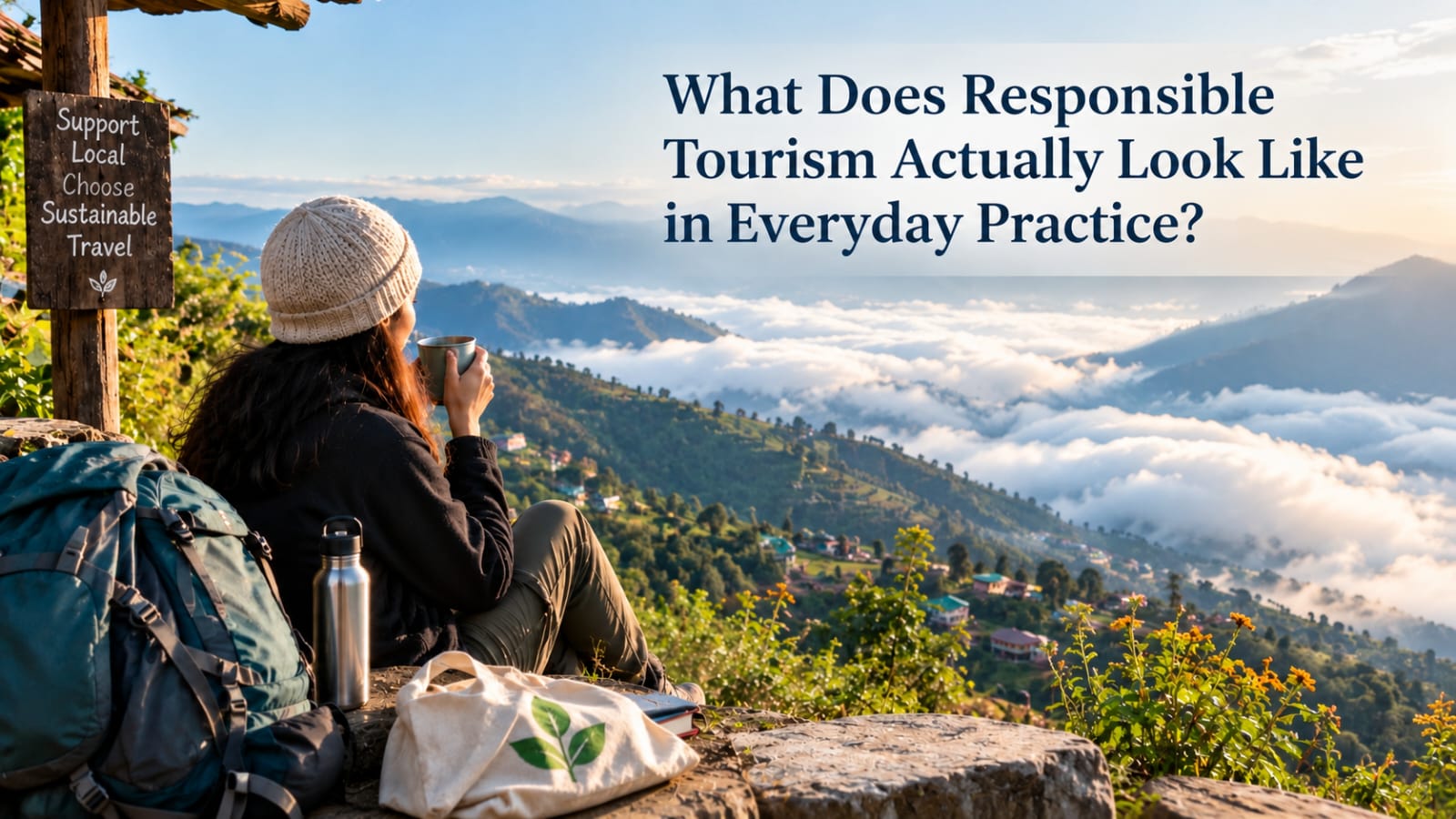
What Does Responsible Tourism Actually Look Like in Everyday Practice?
A traveller buys a cup of tea from a roadside stall, carries an empty water bottle instead of purchasing another plastic one, and asks permission before photographing a local resident. None of these actions seems particularly significant on its own. Yet together, they reflect something important about the way we travel.
Responsible tourism is not about having a perfect holiday or avoiding every environmental impact. It is about making thoughtful decisions that respect local people, protect natural surroundings, and allow destinations to benefit from the visitors they welcome.
The idea sounds straightforward, but what does it actually look like during an ordinary trip? From choosing where to eat to deciding how much water to use in a hotel, responsible travel often comes down to small choices that are easy to overlook.
What Does Responsible Tourism Mean in Everyday Travel?
Responsible tourism means considering how your travel decisions affect the places you visit and the people who live there.
For example, staying in a locally owned guesthouse can help keep tourism income within a community. Following marked walking trails can reduce damage to vegetation, while respecting restrictions at a wildlife sanctuary helps protect animals from unnecessary disturbance.
These choices do not require expensive equipment, specialist knowledge, or a completely different style of holiday. They simply require travellers to think beyond their own convenience.
Responsible tourism also recognises that every destination has different needs. A busy heritage city, a quiet village, and a wildlife reserve face different challenges. Being a responsible visitor means understanding the local context rather than following a single set of rules everywhere.
For a broader understanding of sustainable tourism and its environmental impact, explore the work of the United Nations Environment Programme.
1. Choose Local Businesses When You Can
One of the most practical ways to travel responsibly is to consider where your money goes.
Tourism can create opportunities for local businesses, including family-run restaurants, independent shops, local guides, artisans, and small accommodation providers. However, the benefits depend partly on whether visitors spend their money within the community or rely entirely on large external businesses.
Imagine spending a weekend in Jaipur. You could purchase every souvenir from a large commercial outlet, or you could visit a local artisan selling handmade textiles or traditional crafts. Similarly, eating at a neighbourhood restaurant gives you a chance to experience local food while supporting a business rooted in the area.
This does not mean avoiding established hotel chains or choosing a local business regardless of quality. Instead, look for reasonable opportunities to support people who contribute directly to the destination’s economy.
When hiring a guide, ask about their knowledge of local history and traditions. When buying handicrafts, take an interest in how they are made. These interactions can make a trip more meaningful while helping local livelihoods.
2. Respect Local Customs, Privacy, and Everyday Life
A destination may be a holiday setting for visitors, but it is home to someone else.
In places such as Varanasi, visitors encounter religious ceremonies, busy neighbourhoods, and riverside spaces that hold deep cultural significance. Observing local customs helps travellers appreciate these places without treating everyday life as a performance.
Dress appropriately when visiting religious sites, follow photography restrictions, and ask permission before photographing people, particularly children. If a ceremony is taking place, watch from an appropriate distance rather than moving into the middle of it for a better picture.
Respect also extends to ordinary public spaces. Keep noise levels reasonable in residential areas, avoid blocking narrow streets for photographs, and follow local guidance about entering private property.
These actions matter because tourism can change the atmosphere of a place. When visitors respect the people who live there, cultural experiences become less intrusive and more rewarding for everyone involved.
3. Reduce Plastic Waste Without Making Travel Complicated
Plastic waste is one of the most visible problems in many popular travel destinations. Bottles, food wrappers, disposable cups, and packaging can accumulate along roadsides, beaches, trekking routes, and other public spaces.
A useful approach is to prevent unnecessary waste before it is created.
Carry a reusable water bottle and refill it where safe drinking water is available. Bring a small cloth bag for shopping, decline disposable cutlery when you do not need it, and avoid accepting extra packaging for items you can easily carry.
For example, someone visiting a hill town might buy several bottled drinks throughout the day simply because they forgot to bring a bottle. Planning ahead can reduce that waste without making the trip less enjoyable.
However, reusable bottles should only be refilled from a source known to provide safe drinking water. If safe refilling is unavailable, choose an appropriate alternative rather than risking illness.
And if you encounter litter, never add to it. Carry your waste until you find a suitable disposal point, and follow local rules for separating recyclable and non-recyclable materials.
4. Save Water and Electricity During Your Stay
Responsible travel does not stop when you check into your accommodation.
Hotels, camps, and resorts use water and electricity for lighting, cooling, laundry, cleaning, and other everyday operations. In destinations where resources are limited or demand increases during peak tourist seasons, unnecessary consumption can add pressure to local supplies.
Travellers can help by taking shorter showers, turning off lights and air conditioning when leaving a room, and avoiding unnecessary changes of towels and bedsheets.
Consider visiting a destination during a dry period when water demand is already high. Using water thoughtfully becomes particularly relevant in such circumstances.
The aim is not to feel guilty about using the facilities you have paid for. It is to avoid waste where a small adjustment makes little difference to your comfort.
When choosing accommodation, you can also ask practical questions about water availability, waste disposal, and resource management. Look for clear, verifiable information rather than assuming that a property is sustainable simply because it is located in a natural setting.
5. Experience Nature Without Disturbing It
Natural landscapes often attract visitors because they appear untouched, peaceful, or far removed from city life. Yet the same places can be vulnerable to careless tourism.
On a forest walk, stay on designated trails instead of trampling vegetation to reach a viewpoint. At a beach, avoid leaving food packaging behind. In a wildlife area, follow the guide’s instructions, maintain a safe distance from animals, and never feed them for entertainment or photographs.
Feeding wild animals can change their behaviour and encourage dependence on human food. Getting too close can also cause stress, even when an animal appears calm.
The same principle applies to quieter outdoor destinations. If you are enjoying a riverside picnic, dispose of food scraps properly rather than assuming they will cause no harm. If you collect souvenirs, choose locally made products instead of removing shells, plants, rocks, or other natural materials from protected areas.
Visitors staying at places such as The Cocoon Camps & Nature Resorts can also make their own contribution by observing the surrounding landscape thoughtfully and following the property’s guidance on outdoor activities and waste disposal.
Appreciating nature does not require leaving a place completely untouched by human presence. It means enjoying it without causing avoidable damage.
6. Think Carefully About Transport and Travel Timing
How you reach a destination can influence the environmental impact of your trip.
Where practical, travelling by train or sharing a vehicle can reduce the number of individual journeys compared with everyone travelling separately by car. Once you arrive, walking between nearby attractions or using public transport can also be a sensible option.
For instance, visitors exploring a compact heritage district may find that walking is more convenient than taking a car between every stop. It also gives them more opportunities to notice local shops, architecture, and everyday neighbourhood life.
Travel timing matters, too. Visiting popular places outside their busiest periods, when your schedule allows, can help distribute visitor demand and make the experience more comfortable for residents and travellers alike.
Of course, transport options vary by destination. Safety, accessibility, distance, and available connections should all influence your decisions. Responsible travel is about making realistic improvements, not following an inflexible rule.
7. Make Responsible Choices Before and After Your Trip
Some of the most useful decisions happen before you leave home.
Research local customs, check whether attractions have visitor restrictions, and choose guides or accommodation providers whose claims you can verify. If visiting a protected area, understand the rules before arriving rather than relying on assumptions.
During the trip, follow local instructions, respect designated visitor limits, and report problems through appropriate channels when necessary.
After returning home, think about the experiences and businesses you recommend to others. An honest review can help future visitors make informed decisions. You can also share useful information about local customs or visitor rules without revealing sensitive locations that could put wildlife or fragile natural areas at risk.
These actions extend the benefits of responsible tourism beyond the duration of a single holiday.
Why Small Decisions Matter in Responsible Tourism
No single traveller can solve every challenge associated with tourism. Waste management, resource shortages, overcrowding, and the protection of local livelihoods also require responsible businesses, effective infrastructure, and sound destination management.
Nevertheless, individual choices influence everyday outcomes. A purchase can support a local business. Respecting a photography restriction can protect someone’s privacy. Avoiding unnecessary plastic can reduce waste, while following a wildlife guide’s instructions can prevent harmful encounters.
Responsible tourism becomes more meaningful when these decisions are repeated by many visitors and supported by the organisations that serve them.
Conclusion: Responsible Tourism Starts With Everyday Choices
Responsible tourism is not a special type of holiday reserved for experienced travellers or people willing to spend more money. It is a practical approach to exploring the world with greater awareness of the people, resources, and environments that make each destination worth visiting.
You can start by supporting local businesses, respecting cultural traditions, reducing unnecessary waste, conserving resources, and leaving natural surroundings undisturbed.
The next time you plan a trip, consider not only what you want to experience but also how your presence might affect the place you visit. The best responsible travel choices are often the simplest ones: thoughtful decisions that help make travel more rewarding for visitors and more considerate of the communities that welcome them.
For More Details :
Call or Whatsapp : 9339330090
email: Thecocoon18@gmail.com
website :https://offers.thecocoonresort.com/