
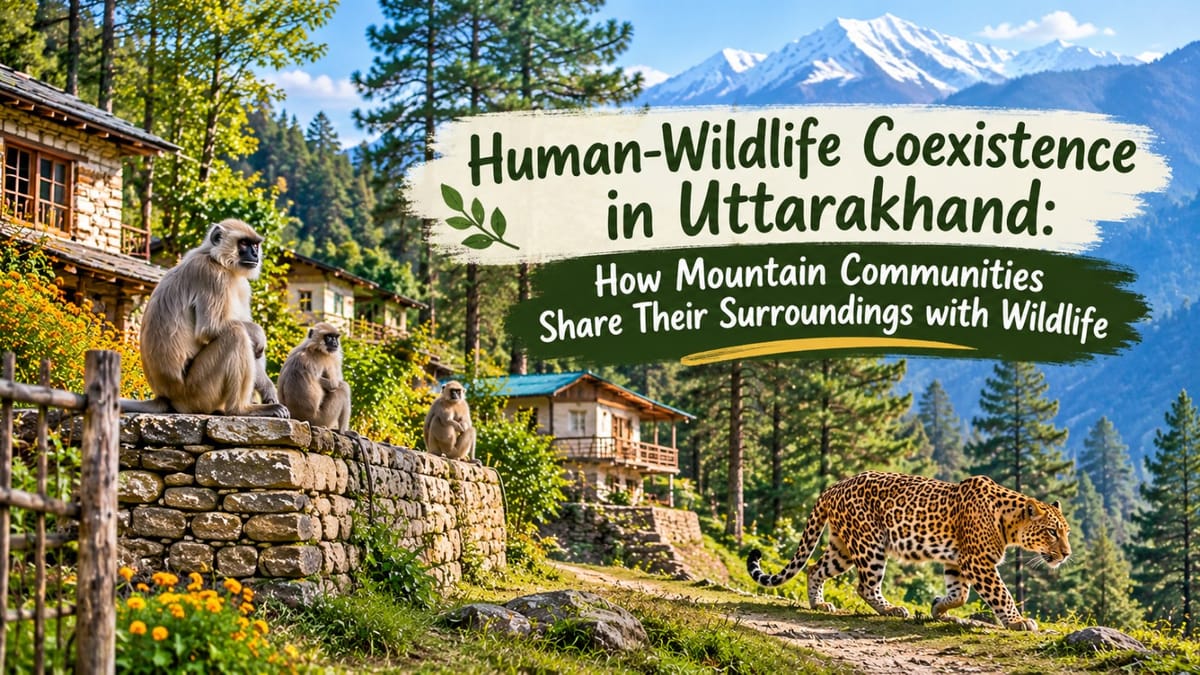
Human-Wildlife Coexistence in Uttarakhand: How Mountain Communities Share Their Surroundings with Wildlife
Living Alongside Wildlife in the Himalayan Mountains
In many parts of Uttarakhand, spotting a monkey near a village, hearing birds calling from nearby trees, or finding signs of a leopard along a forest path is part of everyday life. For people living in the Himalayan region, forests are not simply distant natural landscapes. They are closely connected to their homes, farms, livestock, traditions, and daily routines.
Uttarakhand is home to diverse wildlife, including leopards, Himalayan black bears, monkeys, barking deer, wild boars, and numerous bird species. As villages, agricultural fields, roads, and forests exist close to one another, encounters between humans and animals are sometimes unavoidable.
This relationship brings both beauty and challenges. While wildlife plays an essential role in maintaining the natural balance, local communities also face concerns such as crop damage, livestock attacks, and occasional threats to human safety. Understanding human-wildlife coexistence in Uttarakhand is therefore important for protecting both mountain communities and the animals that share their surroundings.
Why Uttarakhand’s Forests Are Important for Wildlife
The forests of Uttarakhand provide essential habitats for a wide variety of wildlife. From oak and pine forests in the middle Himalayan ranges to the dense forests of the lower hills, different landscapes support different animal and bird species.
These forests provide food, shelter, breeding grounds, and natural movement corridors. They also help maintain healthy ecosystems by supporting soil conservation, regulating water systems, and preserving biodiversity.
For example, oak forests offer food and shelter to several bird and animal species, while forested areas provide natural habitats for leopards and Himalayan black bears. However, when forests become fragmented by roads, construction, agricultural expansion, or other human activities, wildlife may find it difficult to access its natural resources.
As a result, some animals move closer to settlements in search of food or suitable shelter. This is one of the reasons human-wildlife encounters occur in Himalayan villages.
For more information about forest conservation and wildlife protection, visitors can explore the Uttarakhand Forest Department’s official website.
Common Human-Wildlife Encounters in Himalayan Villages
Living near forests means that mountain residents often share their surroundings with animals. Although many encounters are harmless, some can become difficult or dangerous.
- Leopards Near Villages
Leopards are among the most adaptable wild animals found in Uttarakhand. They can survive in different habitats, including forest edges and landscapes close to human settlements.
In some villages, residents report leopard sightings near agricultural fields, footpaths, and livestock shelters. Attacks on domestic animals can also create serious difficulties for families that depend on livestock for their livelihood.
However, leopards generally avoid direct contact with people. Maintaining safe livestock shelters, avoiding poorly lit forest paths after dark, and reporting unusual sightings to forest officials can help reduce risks.
- Himalayan Black Bears and Food Sources
Himalayan black bears inhabit forested mountain regions and are known for their varied diet, which includes fruits, nuts, roots, insects, and other natural food sources.
During certain seasons, they may enter agricultural areas or orchards in search of food. This can result in damaged crops and frightening encounters for villagers.
Keeping food waste away from residential areas and avoiding careless storage of food outdoors can help reduce the chances of attracting wildlife.
- Monkeys and Crop Damage
Monkeys are a familiar sight in many parts of Uttarakhand. Although they are interesting to observe, their presence can create problems for farmers.
They may enter fields, damage vegetables, eat fruits, and sometimes search for food around houses. Repeated crop damage can affect household income, particularly in villages where agriculture remains an important source of livelihood.
Feeding wild monkeys can make the situation worse by encouraging them to depend on human food and approach settlements more frequently.
- Other Wildlife Around Settlements
Wild boars, barking deer, and other animals may also move through agricultural landscapes and forest boundaries. Wild boars can damage crops, while deer may occasionally enter fields.
These encounters highlight how closely connected agricultural land and natural habitats can be in mountain regions.
The Challenges Local Communities Face
Human-wildlife coexistence is not always peaceful. For families living near forests, sharing space with wildlife can involve real economic and safety concerns.
Crop destruction is one of the most common difficulties. When animals enter agricultural fields, farmers may lose vegetables, grains, and fruits that require months of hard work. Livestock attacks can create further financial pressure, especially for households that depend on cattle, goats, or sheep.
Another concern is the changing lifestyle of mountain villages. As younger residents move towards towns and cities for education and employment, fewer people may remain to manage farms, protect livestock, or maintain traditional agricultural practices.
Consequently, some residents may find it increasingly difficult to manage wildlife-related challenges.
However, it is equally important to recognise that wild animals are not deliberately creating problems for communities. Their behaviour is often influenced by changes in habitat, seasonal food availability, and the growing overlap between human activities and natural environments.
Practical Ways to Encourage Human-Wildlife Coexistence
Protecting wildlife does not mean ignoring the difficulties faced by local residents. Effective coexistence requires practical solutions that make villages safer while allowing animals to survive in their natural habitats.
Some important measures include:
- Protecting livestock: Strong and secure animal shelters can reduce the risk of attacks by predators, particularly during nighttime.
- Managing food waste: Garbage, leftover food, and open compost areas should be managed carefully to avoid attracting wild animals.
- Avoiding wildlife feeding: Feeding monkeys, bears, or other wild animals can change their natural behaviour and increase their dependence on people.
- Improving awareness: Local awareness programmes can help residents understand animal behaviour, recognise warning signs, and respond safely to encounters.
- Reporting wildlife activity: Unusual animal sightings, aggressive behaviour, or livestock attacks should be reported to the local forest department.
- Protecting natural habitats: Conserving forests and wildlife corridors helps animals access their natural food sources and move through their habitats.
Most importantly, people should avoid approaching, chasing, or attempting to handle wild animals. Maintaining distance and following guidance from forest officials is essential.
Why Local Communities Play a Vital Role in Human-Wildlife Coexistence in Uttarakhand
Government policies and conservation programmes are important, but wildlife protection also depends on the people who live closest to natural habitats.
Mountain communities possess valuable knowledge about local forests, seasonal changes, animal movement, and the surrounding environment. Their everyday experiences can contribute significantly to understanding wildlife behaviour and identifying areas where human-animal encounters are becoming more frequent.
Involving villagers in conservation initiatives, providing support to families affected by wildlife damage, and improving access to reliable information can encourage greater participation.
Responsible tourism can also contribute positively. When visitors respect forest boundaries, avoid disturbing animals, and follow local guidance, tourism can support awareness and appreciation of the natural environment.
The goal should not be to keep people and wildlife completely separated, but to create conditions in which both can live with fewer risks.
Experiencing the Natural Beauty of Pangot Responsibly
Pangot, a peaceful Himalayan village near Nainital, is known for its forest surroundings, rich birdlife, and natural landscapes. Its oak and pine forests create an environment where visitors can experience the quieter side of Uttarakhand’s mountains.
For nature lovers, spending time in such surroundings offers an opportunity to understand the importance of preserving natural habitats. Birdwatching, observing the forest from a safe distance, and enjoying quiet nature walks can help visitors appreciate the region’s biodiversity.
The Cocoon Camps & Nature Resorts, Pangot, offers travellers an opportunity to experience these peaceful forest surroundings while enjoying a nature-focused stay. Being in a forest-rich landscape also serves as a reminder that these natural spaces are shared with wildlife and deserve thoughtful care.
Visitors should avoid feeding animals, littering, playing loud music near forest areas, or attempting to approach wildlife for photographs. Responsible behaviour helps protect the environment and makes nature experiences more respectful for everyone.
Frequently Asked Questions (FAQs)
- Which wild animals are commonly found in Uttarakhand?
Uttarakhand is home to leopards, Himalayan black bears, monkeys, barking deer, wild boars, Himalayan tahr, and numerous bird species. The animals found in a particular area depend on its altitude, habitat, and forest conditions.
- Why do wild animals enter villages in Uttarakhand?
Animals may enter villages in search of food, water, or shelter. Changes in natural habitats, seasonal food availability, and human activities near forest boundaries can also increase encounters.
- How can villagers protect themselves from wildlife?
Residents can use secure livestock shelters, avoid walking alone through forested areas after dark, manage food waste properly, and report unusual wildlife activity to forest officials. They should never approach or provoke wild animals.
- How can tourists support wildlife conservation in Uttarakhand?
Tourists can contribute by avoiding littering, never feeding wild animals, maintaining a safe distance during sightings, following local forest guidelines, and choosing responsible nature-based tourism experiences.
- Why is human-wildlife coexistence important?
Human-wildlife coexistence helps protect biodiversity while recognising the safety and livelihood needs of local communities. It supports healthier ecosystems and encourages a more sustainable relationship between people and nature.
Conclusion: Building a Better Future for People and Wildlife
The relationship between mountain communities and wildlife in Uttarakhand is shaped by shared landscapes, everyday encounters, and the challenges of living close to nature. Although crop damage, livestock losses, and safety concerns cannot be ignored, wildlife remains an essential part of the Himalayan ecosystem.
True human-wildlife coexistence requires understanding, patience, awareness, and practical conservation efforts. Protecting forests, supporting local residents, and encouraging responsible tourism can make a meaningful difference.
Ultimately, the future of Uttarakhand’s natural heritage depends on maintaining a balance between human needs and wildlife protection. When communities and visitors learn to respect the boundaries of nature, the mountains can remain a safe and thriving home for both people and wildlife.
For More Details :
Call or Whatsapp : 9339330090
email: Thecocoon18@gmail.com
website :https://offers.thecocoonresort.com/