
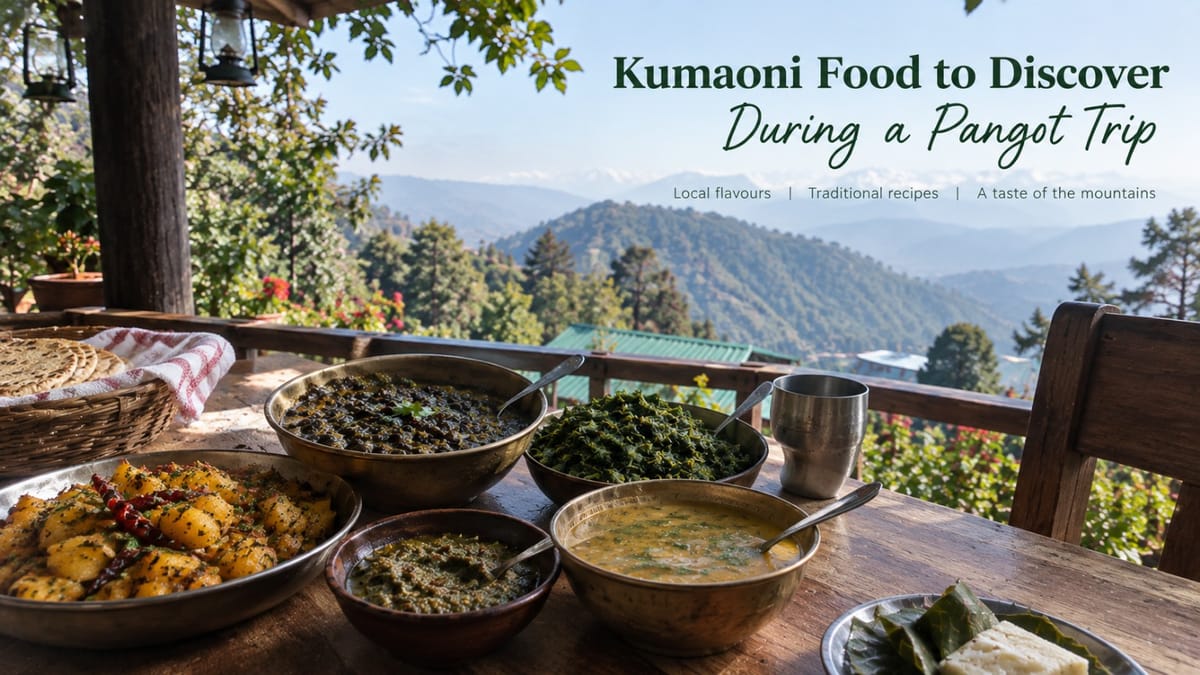
Kumaoni Food to Discover During a Pangot Trip
A trip to Pangot is about more than quiet mountain roads, forest trails, birdwatching, and beautiful Himalayan views. For many travelers, the most memorable part of exploring the Kumaon region is discovering its food. Kumaoni food in Pangot offers a delicious way to experience the local culture, with simple recipes, seasonal ingredients, earthy flavors, and traditional cooking methods.
From comforting bowls of bhatt ki churkani to the popular aloo ke gutke, the region has plenty of Kumaoni dishes worth trying. Whether you are planning a relaxed weekend getaway or a longer Pangot trip, adding local food to your itinerary can make the experience feel more connected to the mountains.
If you are wondering about the food to try in Pangot, here are some traditional Kumaoni specialties to look for during your stay.
What Makes Kumaoni Food Special?
Traditional Kumaoni cuisine reflects the lifestyle and natural surroundings of Uttarakhand. Many recipes use locally available lentils, grains, vegetables, spices, and herbs. The food is generally wholesome and comforting rather than overly elaborate.
One of the most interesting things about Kumaoni cuisine is how ordinary ingredients are transformed into flavorful dishes. Local spices and cooking techniques give even simple preparations a distinctive taste.
Depending on where you eat, the exact preparation can vary from one household or restaurant to another. That is part of the charm of exploring regional food—you may discover different versions of the same classic dish.
Popular Kumaoni Food in Pangot to Try
1. Aloo Ke Gutke
Aloo ke gutke is one of the most recognizable dishes associated with Uttarakhand. Potatoes are cut into chunks and cooked with spices, often including cumin and local red chillies.
The result is a simple but flavorful potato dish that pairs particularly well with roti or other local breads. If you are looking for an easy introduction to Kumaoni cuisine, aloo ke gutke is a great place to start.
It can be especially satisfying after a morning spent walking through Pangot’s forested surroundings.
2. Bhatt Ki Churkani
Bhatt ki churkani is a traditional Kumaoni preparation made using bhatt, a locally popular black soybean. The lentils are cooked into a rich, comforting gravy with spices and other ingredients.
It is the kind of dish that showcases the hearty character of traditional Kumaoni food. Served with rice or roti, it makes a filling mountain meal and is well suited to the cooler climate of the region.
For travelers interested in experiencing food beyond familiar North Indian staples, bhatt ki churkani is a dish worth seeking out.
3. Kafuli
Kafuli is a nutritious preparation made primarily with leafy greens. Traditionally, local greens such as spinach and fenugreek may be used, depending on the recipe and availability.
Its thick texture and earthy flavor make it a comforting accompaniment to rice or roti. Since Kumaoni cooking often makes excellent use of seasonal produce, dishes such as kafuli offer an interesting glimpse into the region’s relationship with local ingredients.
4. Bhang Ki Chutney
Despite its unusual name for visitors unfamiliar with Uttarakhand’s cuisine, bhang ki chutney is a traditional accompaniment made from roasted hemp seeds, usually combined with spices and souring ingredients.
It has a distinctive nutty and tangy flavor and is generally served in small quantities alongside meals.
Trying a local chutney is one of the easiest ways to experience a regional flavor without committing to an entire unfamiliar dish.
5. Jhol
Jhol refers to a thin, flavorful gravy that can accompany different Kumaoni preparations. It is particularly enjoyable with rice and can provide a light contrast to richer lentil or vegetable dishes.
The preparation can differ depending on the household or establishment, so asking what version is available can make the experience more interesting.
6. Singori
If you have a sweet tooth, look for singori, a traditional sweet associated with Kumaon. It is typically prepared using khoya and wrapped in a leaf, which also gives it a distinctive presentation.
Its creamy texture and traditional preparation make it a memorable way to finish a Kumaoni meal.
Where to Experience Kumaoni Food in Pangot
Finding local food during a Pangot trip does not necessarily mean looking for a large restaurant. Some of the most enjoyable experiences can come from smaller eateries, homestays, cafés, or resorts that include regional dishes in their menus.
When ordering, ask whether the kitchen prepares Kumaoni food using locally inspired recipes. Menus can vary according to the season, availability of ingredients, and the establishment.
Another useful tip is to ask locals or your accommodation team about dishes that are especially popular at the time of your visit. Regional food is often seasonal, and recommendations from people familiar with the area can help you discover something that may not appear on a standard menu.
Enjoy a Comfortable Stay at The Cocoon Camps & Nature Resorts
Food is even more enjoyable when you have a peaceful place to return to after a day of exploring. The Cocoon Camps & Nature Resorts offers a comfortable base for travelers exploring Pangot’s natural surroundings and experiencing its local culture.
For visitors who want to combine nature, relaxation, and regional experiences, staying at The Cocoon Camps & Nature Resorts can make it convenient to plan days around forest walks, birdwatching, sightseeing, and discovering local food.
As you explore options for the best resort in Pangot, it is worth considering what kind of experience you actually want from your stay. A comfortable property that complements your plans can be just as important as the attractions on your itinerary. The Cocoon Camps & Nature Resorts provides a nature-focused setting where you can slow down after a day of exploring.
You can also ask the resort team about local dining options and traditional dishes available around Pangot. This can be particularly helpful if you want to experience Kumaoni cuisine rather than simply eating familiar restaurant food throughout your trip.
Tips for Exploring Food in Pangot
Before setting out on your culinary exploration, keep a few simple things in mind:
– Ask about local specialties: Not every restaurant serves every traditional dish, so ask what is available that day.
– Try seasonal food: Local ingredients and preparations may change depending on the season.
– Start with familiar dishes: Aloo ke gutke and bhang ki chutney can be approachable introductions to regional flavors.
– Eat at a relaxed pace: Mountain meals are best enjoyed without rushing.
– Respect local food traditions: Recipes can differ between families and communities, so there is no single version of every Kumaoni dish.
– Carry some snacks: If you plan to spend several hours birdwatching or hiking, having something with you can be useful.
Make Food Part of Your Pangot Experience
A destination becomes more memorable when you experience it through more than its scenery. In Pangot, the forests and mountain views tell one part of the story, while the local kitchen tells another.
Exploring Kumaoni food in Pangot gives travelers an opportunity to discover the flavors and traditions of Uttarakhand through dishes such as aloo ke gutke, bhatt ki churkani, kafuli, bhang ki chutney, jhol, and singori.
So, while planning your next Pangot trip, leave some room in your itinerary for a traditional meal. After a day surrounded by Himalayan nature, sitting down to a warm local dish can be one of the simplest—and most rewarding—ways to experience the region.
For a comfortable nature-focused stay while you explore Pangot and its culinary traditions, consider The Cocoon Camps & Nature Resorts as part of your travel plans. Sometimes, the best travel memories are created not just on the trail, but around the table.
For More Details :
Call or Whatsapp : 9339330090
email: Thecocoon18@gmail.com
website :https://offers.thecocoonresort.com/