
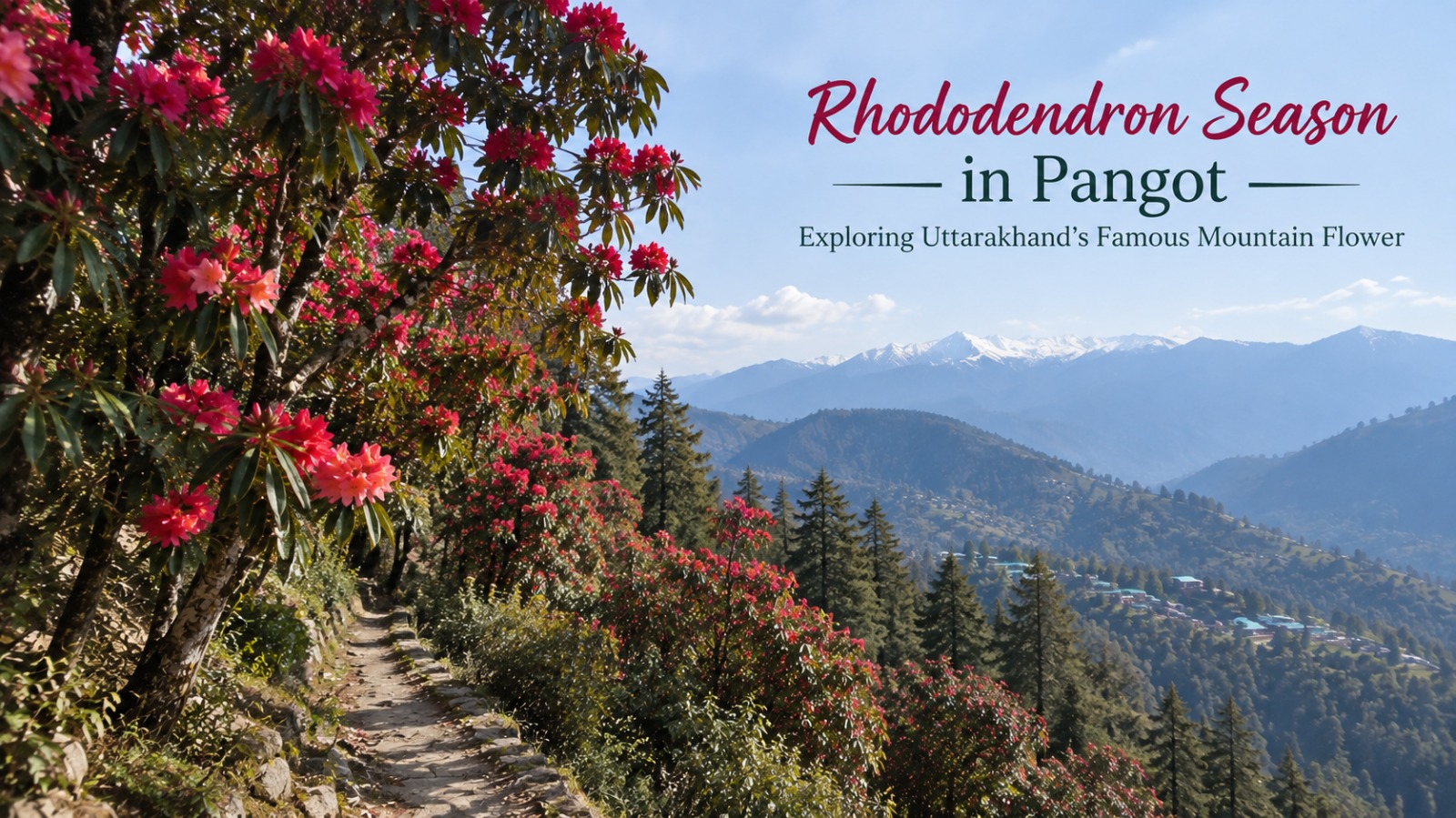
Rhododendron Season in Pangot: Exploring Uttarakhand’s Famous Mountain Flower
There is something special about visiting the mountains in spring. The forests begin to wake up after winter, the weather becomes pleasant, birds become more active, and splashes of colour appear among the green hills. In Pangot, Nainital, one of the most beautiful signs of this seasonal change is the blooming of rhododendrons.
The Rhododendron Season in Pangot brings a different character to the Himalayan landscape. Forest trails that may look quiet and understated at other times of the year can suddenly be dotted with vivid red and pinkish blooms. For travellers who enjoy walking, photography, birdwatching, or simply spending time surrounded by nature, this can be a particularly rewarding period to explore the region.
If you are wondering about the rhododendron season in Uttarakhand, when to visit Pangot, and what you can expect during this colourful period, here is everything you need to know.
What Are Rhododendrons and Why Are They Famous in Uttarakhand?
Rhododendrons are flowering shrubs and trees belonging to the Rhododendron genus. Several species grow naturally across the Himalayan region, where they have become closely associated with mountain forests and springtime landscapes.
In Uttarakhand, rhododendrons are particularly well known for their striking flowers, especially the bright red blooms that stand out against the surrounding greenery. The state is home to the Himalayan rhododendron, commonly known as Buransh or Burans.
The flowers have cultural and traditional significance in the Himalayan region too. Their appearance is often seen as one of the unmistakable signs that spring has arrived in the mountains.
For visitors, however, the attraction is wonderfully simple: walking through a forest and unexpectedly finding a tree covered in colourful blossoms is an experience that makes a mountain trip feel a little more memorable.
When Is the Rhododendron Season in Pangot?
The timing of rhododendron flowering can vary from year to year depending on altitude, temperature, rainfall, and local weather conditions. Generally, late winter to spring is the period to look forward to, with flowering often occurring around March and April in parts of Uttarakhand.
This means the Rhododendron Season in Pangot usually overlaps with the pleasant spring period, although exact flowering dates should not be treated as fixed.
If seeing rhododendrons is one of the main reasons for your trip, it is worth checking local conditions closer to your travel dates rather than relying solely on a calendar.
Spring is also a comfortable season for exploring Pangot. Temperatures are generally more pleasant than the colder winter months, while the landscape begins showing fresh seasonal colour.
What Does Pangot Look Like During Rhododendron Season?
Pangot is known for its forested hills, quiet surroundings and rich birdlife, and spring adds another layer to this natural setting.
During flowering season, rhododendron trees can bring vivid patches of colour to the forests. The contrast between the flowers, green foliage and Himalayan landscape makes even an ordinary forest walk feel more scenic.
Early mornings can be especially enjoyable. The air tends to feel fresh, the forest is relatively quiet, and birds can be heard among the trees. As sunlight moves through the forest, the colours of the landscape gradually change.
This is what makes Pangot in spring appealing. You are not travelling solely to see one flower. You are experiencing a seasonal transformation of the entire mountain environment.
Where Can You Experience Rhododendron Blooms Around Pangot?
The best way to experience flowers in Pangot is to explore the forested areas and walking routes around the village rather than expecting one designated flower-viewing spot.
Rhododendrons grow naturally in Himalayan forest environments, so flowering can be encountered along suitable forest trails and roads in and around Pangot. Nearby forested areas of the Nainital region can also offer opportunities to see seasonal blooms.
The exact locations and intensity of flowering can change from one year to another. Local residents, guides and your accommodation can be useful sources of current information about what is blooming during your visit.
Rather than rushing from one viewpoint to another, give yourself time to walk slowly. Look above the trail as well as along the roadside, because some rhododendron trees can be easy to miss when you are focused only on the path ahead.
Why Visit Pangot During Rhododendron Season?
A treat for nature lovers
Spring makes it easier to appreciate the small details of the Himalayan environment. Along with rhododendrons, you may notice fresh foliage, changing light, insects and other seasonal signs of life.
A beautiful season for photographers
Rhododendron blooms provide natural colour without taking away from the surrounding landscape. They work beautifully as foreground subjects in photographs, particularly when framed against forested hills.
Morning and late-afternoon light can create especially pleasant conditions for landscape photography.
An excellent time for birdwatching
Pangot is already popular among birdwatchers because of its forest habitat and variety of Himalayan birds. Spring can make a birdwatching walk particularly enjoyable, although sightings are never guaranteed.
Carry binoculars if you have them and avoid making excessive noise. The quieter you are, the more likely you are to notice birds and other wildlife around you.
Enjoyable for hikers and walkers
If you enjoy gentle forest walks, rhododendron season adds an extra reason to spend time outdoors. You do not necessarily need a demanding trek to appreciate the scenery. Even a relaxed walk can reveal flowers, birds and changing mountain views.
For anyone searching for things to do in Pangot, exploring the surrounding forest at a leisurely pace is one of the simplest and most rewarding options.
Things to Know Before Planning Your Trip
If you are planning a visit specifically around the Rhododendron Season in Pangot, keep a few practical points in mind.
Flowering is weather-dependent. Do not expect every tree to be in bloom throughout your trip. The season can shift depending on weather conditions.
Carry layers. Spring days can be comfortable, but mornings and evenings in the hills can still feel chilly.
Wear comfortable footwear. Forest paths can be uneven, and suitable shoes will make walking much easier.
Carry water and basic essentials. If you plan to spend several hours walking, it is better to be prepared rather than depend on finding facilities along every trail.
Respect the forest. Avoid picking flowers, disturbing birds or leaving litter behind. Rhododendrons are part of the natural ecosystem, not souvenirs to take home.
Start early. Morning walks are often more peaceful and can be particularly rewarding for birdwatchers and photographers.
Where to Stay in Pangot During Spring
A comfortable base can make a big difference when your main goal is to spend time outdoors. Staying close to nature allows you to slow down rather than treating Pangot as a quick sightseeing stop.
The Cocoon Camps & Nature Resorts, Pangot, Nainital can be considered by travellers looking for a peaceful nature stay while exploring the surrounding Himalayan landscape. Its setting makes it suitable as a base for relaxing between forest walks, birdwatching and exploring Pangot.
For travellers specifically searching for a Pangot nature stay, it is worth choosing accommodation that complements the quiet, forested character of the destination rather than taking you away from it.
Practical Travel Tips for a Pangot Spring Trip
Before finalising your plans, check the weather forecast and local road conditions, particularly if you are travelling during a period of unpredictable mountain weather.
Keep your itinerary flexible. Instead of filling every day with sightseeing, leave enough time for walks around the forest and simply enjoying the surroundings.
A camera or smartphone is useful, but do not spend the entire walk looking through a screen. Some of the best moments in Pangot come from noticing a bird call, spotting a flower around a bend or sitting quietly among the trees.
If rhododendrons are your priority, ask locally about the current flowering conditions when you arrive. This can give you a much better idea of where to explore than relying on fixed seasonal expectations.
Is Rhododendron Season the Best Time to Visit Pangot?
For travellers who enjoy spring landscapes, flowers, birdwatching and outdoor walks, rhododendron season can certainly be one of the best times to visit Pangot.
But there is no single perfect season for everyone. Some visitors may prefer the crisp winter atmosphere, while others may enjoy the greenery of the warmer months. Spring simply offers something distinctive: colourful blooms combined with pleasant weather and the renewed energy of the forest.
A Colourful Reason to Explore Pangot
The Rhododendron Season in Pangot is not about chasing a particular flower at a particular location. It is about experiencing the mountains during a beautiful seasonal transition.
As rhododendrons begin to bloom across the Himalayan forests, Pangot takes on fresh colour while its familiar sounds of birds, rustling leaves and quiet mountain air remain unchanged.
Whether you arrive with a camera, binoculars, hiking shoes, or simply a desire to slow down, spring offers plenty of reasons to explore Pangot Nainital at a gentler pace. And sometimes, the most memorable part of the journey is not finding the perfect viewpoint—it is discovering a bright rhododendron bloom unexpectedly along a quiet forest trail.
For More Details :
Call or Whatsapp : 9339330090
email: Thecocoon18@gmail.com
website :https://offers.thecocoonresort.com/