
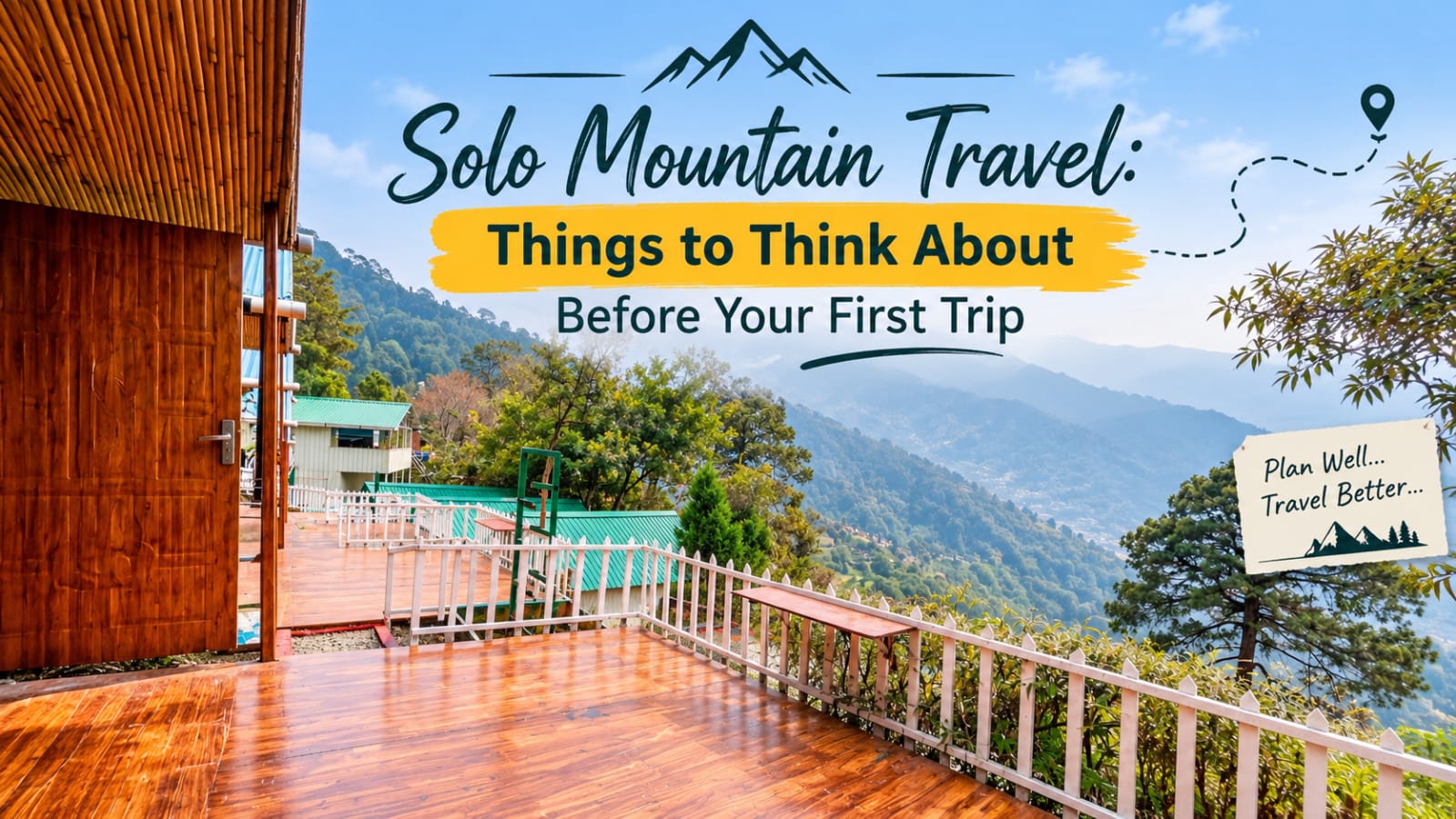
Solo Mountain Travel: Things to Think About Before Your First Trip
Solo mountain travel can be a very different experience from visiting a busy tourist destination with friends or family. You get to decide when to wake up, which trail to explore and how much time to spend enjoying a beautiful view. There is no need to follow someone else’s schedule.
However, a solo mountain trip also comes with responsibilities. Remote roads, changing weather, limited mobile connectivity and unfamiliar surroundings can make even a simple journey challenging if you are not prepared.
If you are planning your first solo mountain adventure, a little preparation can make the experience much more comfortable. Here are some important things to consider before setting off.
-
Choose the Right Destination for Solo Mountain Travel
Your first solo mountain trip does not need to be an adventurous expedition. Instead of choosing a remote village or a difficult trekking destination, start somewhere relatively accessible.
Look for places with established accommodation, reliable transportation options, nearby shops and basic medical facilities. Popular mountain destinations can be a good starting point because they generally have better-developed tourist facilities.
For example, Pangoot in Uttarakhand offers a quieter mountain experience surrounded by forests and natural landscapes. It can be worth considering if you prefer peaceful surroundings over crowded tourist areas.
Before finalising your destination, research its distance from the nearest town, road conditions and availability of local transport.
- Prioritise Safety When Travelling Alone
Safety deserves extra attention when you are travelling without a companion. Even a familiar-looking mountain destination can present unexpected challenges.
Before leaving, share your travel plans with someone you trust. Give them your accommodation details, expected arrival time and basic itinerary. Keep them informed if your plans change.
A few important solo travel safety precautions include:
- Save emergency contact numbers on your phone.
- Avoid isolated trails, especially after sunset.
- Do not share your live location or accommodation details publicly.
- Keep digital and physical copies of important documents.
- Trust your instincts if a place or situation feels uncomfortable.
- Avoid accepting lifts from unknown people.
If you are a woman planning your first solo trip, check recent accommodation reviews and choose properties with a clear check-in process and accessible staff.
Being cautious does not mean you cannot enjoy travelling alone. It simply helps you make better decisions.
- Research Your Accommodation Before Booking
Where you stay can significantly influence your solo travel experience. A beautiful property may look appealing online, but practical details matter just as much.
Check guest reviews, location, road access, available facilities and the distance from the nearest market. If you are arriving late, confirm whether the property offers late check-in.
You can also consider smaller nature resorts and cottages if you prefer a peaceful environment.
For travellers exploring Pangoot, The Cocoon Camps & Nature Resorts is one accommodation option to explore. Its wooden and bamboo cottages and tree house offer a nature-oriented stay surrounded by the peaceful mountain environment of Pangoot.
Before booking any property, contact the accommodation directly to clarify transportation arrangements, meal availability and other requirements.
- Prepare a Realistic Travel Budget
One common mistake first-time solo travellers make is planning their budget around accommodation and transportation alone.
There are several smaller expenses to consider, including meals, local travel, entry fees, snacks and emergency costs. Mountain destinations can also have limited transport options, which may increase travel expenses.
Your budget should include:
- Transportation to and from the destination.
- Accommodation charges.
- Daily food and refreshments.
- Local sightseeing or activity expenses.
- Emergency money for unexpected situations.
Keep some cash with you because digital payment facilities may not work everywhere. It is also sensible to maintain a separate emergency fund rather than spending your entire travel budget.
- Pack According to the Mountain Weather
Packing for the mountains requires more thought than packing for a regular weekend getaway. Temperatures can change throughout the day, and evenings may become considerably colder.
Instead of carrying too many clothes, choose comfortable and practical essentials.
Your packing list should include:
- Warm layers, even during warmer months.
- Comfortable walking shoes with good grip.
- A lightweight rain jacket or umbrella.
- Personal medicines and a basic first-aid kit.
- Reusable water bottle.
- Power bank and charging cables.
- Sunscreen, sunglasses and toiletries.
- Identity documents and some cash.
If you plan to explore forest trails or uneven paths, comfortable footwear is particularly important. Avoid carrying unnecessary luggage, especially if you will be using public transportation.
- Understand the Weather Before You Travel
Mountain weather can be unpredictable. A sunny morning does not necessarily mean the entire day will remain pleasant.
Check the local weather forecast a few days before departure and again on the morning of your journey. Pay attention to rainfall warnings, temperature drops and road conditions.
During the monsoon, heavy rainfall can cause landslides, road closures and travel delays in certain Himalayan regions. Winter journeys may also require additional preparation because of low temperatures and occasional snowfall.
Avoid continuing with your original itinerary if local authorities or accommodation staff advise against travelling due to weather conditions.
For the latest travel updates, weather information and destination guidance, visitors can also refer to the “Uttarakhand Tourism official website”
- Plan Your Transportation in Advance
Transportation is another important consideration during solo mountain travel.
Research how to reach your destination, whether by bus, train, taxi or a combination of transport options. If you are travelling to a smaller mountain village, check the availability of local taxis for the final stretch.
Do not assume that public transport will be available at every hour. In remote areas, services may be limited, particularly in the evening.
Whenever possible, plan your arrival during daylight. It makes finding your accommodation easier and allows you to become familiar with the surroundings.
Keep your accommodation’s contact number handy in case you experience delays.
- Do Not Depend Entirely on Mobile Connectivity
Mobile networks and internet connections can become unreliable as you travel deeper into the mountains.
Download offline maps before leaving and save important information such as your hotel address, booking confirmation and transportation details.
You should also:
- Download essential travel documents.
- Keep important phone numbers written down.
- Carry a fully charged power bank.
- Inform someone before entering an area with poor connectivity.
If you are staying somewhere surrounded by forests, do not assume that your usual mobile network will work consistently.
Being prepared for limited connectivity can prevent unnecessary stress during your journey.
- Keep Your Itinerary Flexible
Planning every hour of your trip may seem organised, but mountain travel does not always go according to schedule.
A delayed taxi, unexpected rainfall or a road closure can change your plans. Instead of creating a packed itinerary, choose a few activities you genuinely want to experience.
For a short solo mountain trip, you could spend one day settling into your accommodation and exploring nearby surroundings. The following day could be reserved for a guided nature walk, local sightseeing or simply enjoying the landscape.
Leave enough time for meals, rest and unexpected delays. If you are unfamiliar with an area, avoid attempting difficult hikes without a local guide.
- Give Yourself Time to Enjoy Travelling Alone
Perhaps the biggest difference between solo travel and travelling with others is the amount of time you spend making decisions independently.
You might initially feel uncomfortable eating alone, exploring an unfamiliar place or spending an entire evening without company. That is perfectly normal, particularly during your first trip.
You do not have to fill every moment with activities. Enjoy a quiet morning, observe the surrounding landscape, read a book or have a conversation with local people when appropriate.
Remember that travelling alone does not mean ignoring your safety or pushing yourself beyond your comfort zone. Take things at your own pace.
Conclusion
Your first solo mountain trip does not have to be perfect to become a memorable experience. What matters is choosing a suitable destination, understanding the local conditions and preparing for situations that may arise along the way.
From checking accommodation and transportation to packing sensibly and keeping emergency contacts accessible, small preparations can make a significant difference.
Whether you choose a peaceful destination such as Pangoot or another Himalayan getaway, give yourself enough time to explore without rushing. With thoughtful planning and a flexible approach, solo mountain travel can become a rewarding way to discover new places while gaining confidence in your own decisions.
Frequently Asked Questions
- Is solo mountain travel safe for first-time travellers?
Yes, solo mountain travel can be safe when you choose an accessible destination, book reliable accommodation, share your itinerary with someone you trust and follow local safety advice.
- What should I pack for my first solo mountain trip?
Carry comfortable walking shoes, warm clothing, rain protection, personal medicines, a first-aid kit, sunscreen, identity documents, cash and a power bank. Adjust your packing according to the season and destination.
- How many days are enough for a solo mountain trip?
A two-to-three-day trip is a reasonable starting point for beginners. It gives you enough time to explore the destination, enjoy the surroundings and become comfortable with travelling independently.
- Is Pangoot a good destination for a peaceful solo mountain getaway?
Pangoot in Uttarakhand is known for its forest surroundings, Himalayan scenery and quieter atmosphere. Travellers considering a visit should research transportation, weather and accommodation in advance. Properties such as The Cocoon Camps & Nature Resorts offer nature-oriented accommodation options in the area.
For More Details :
Call or Whatsapp : 9339330090
email: Thecocoon18@gmail.com
website :https://offers.thecocoonresort.com/