
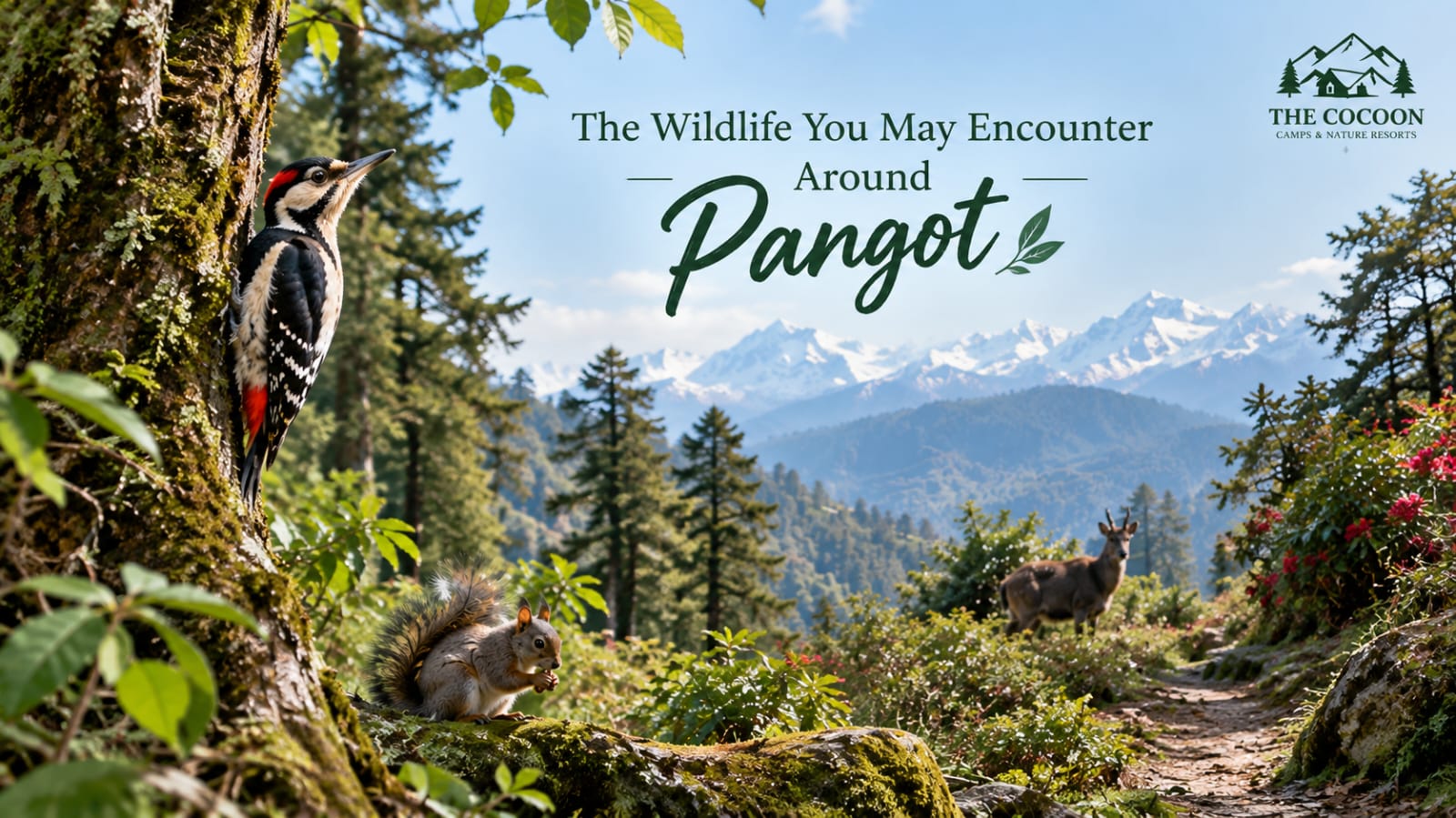
The Wildlife You May Encounter Around Pangot
If you enjoy quiet forests, mountain landscapes, and the simple pleasure of spotting a bird moving through the trees, Pangot is a wonderful place to explore. Located near Nainital in Uttarakhand, this small Himalayan village is surrounded by oak, pine, and rhododendron forests that provide habitat for a variety of birds and animals.
The wildlife in Pangot is not necessarily about seeing large animals at close range. Instead, it is often about slowing down, listening carefully, and noticing the smaller signs of life around you. A bird calling from the forest canopy, a squirrel moving between branches, or tracks along a forest path can all become part of the experience.
What Kind of Wildlife Can You Find in Pangot?
The forests around Pangot support a range of Himalayan wildlife. The species visitors may encounter depend on the season, weather, location, and even the time of day.
Birds are among the most noticeable forms of wildlife around Pangot. The surrounding forests are known for their variety of Himalayan and woodland birds. Visitors may also come across small mammals and, occasionally, signs of larger animals that live deeper in the forest.
It is important to remember that wildlife sightings are never guaranteed. Animals are naturally cautious and may stay hidden, particularly when there are people nearby. That unpredictability is part of what makes wildlife watching interesting.
Birds in Pangot: A Highlight for Nature Lovers
For many visitors, birds in Pangot are the main attraction. The forested landscape provides an excellent setting for observing different species, especially for people who enjoy birdwatching.
Depending on the area and season, you may spot birds such as Himalayan woodpeckers, barbets, flycatchers, tits, bulbuls, jays, and laughingthrushes. Colourful birds can sometimes be seen moving through the branches, while others are easier to identify by their calls.
The best way to enjoy birdwatching is to avoid rushing. Carrying binoculars can make it easier to observe birds without getting too close. Early mornings are particularly rewarding because birds are often active and the forest is relatively quiet.
Even if you are not an experienced birdwatcher, Pangot can make bird spotting enjoyable. You do not need specialist knowledge to appreciate the sounds, movement, and variety of life around you.
Small Animals You May Notice
The animals in Pangot are not limited to large forest species. Smaller mammals are often easier to encounter during a casual walk or while spending time around forested areas.
Squirrels are among the animals visitors may notice, particularly around trees and quieter surroundings. You may also see other small woodland creatures moving through vegetation, although they can disappear quickly when disturbed.
Rather than expecting wildlife to appear on demand, look for movement in the trees, rustling leaves, footprints, feeding marks, or calls. These small observations can make a walk through Pangot much more interesting.
Larger Himalayan Wildlife Around Pangot
The forests surrounding Pangot are also home to larger wild animals. Species associated with the broader Himalayan forest landscape can include barking deer, wild boar, Himalayan goral, and other forest mammals. Some larger predators are also part of the wider ecosystem.
However, visitors should not assume that they will see these animals during their stay. Most larger wildlife is elusive and tends to avoid humans. Seeing an animal in the wild is a matter of chance, and responsible travel should never involve trying to approach, chase, feed, or attract wildlife.
This is an important part of understanding Himalayan wildlife. A healthy forest is one where animals can move freely without depending on visitors for food or coming into frequent contact with people.
Where Are You More Likely to Notice Wildlife?
Wildlife can potentially be encountered in different forested areas around Pangot. Quiet trails, forest edges, wooded paths, and areas with dense vegetation can offer opportunities for observation.
Birds are often easier to notice around trees and open forest sections, especially where there is plenty of natural food. Small animals may be active around vegetation and quieter paths.
If you are staying in Pangot, spending some time outdoors without constantly moving from one attraction to another can improve your chances of noticing nature. A comfortable, nature-focused stay such as The Cocoon Camps & Nature Resorts can also make it convenient to spend more time enjoying the surrounding environment rather than treating wildlife as a quick sightseeing activity.
The key is patience. Wildlife watching is more about being observant than covering a large number of places.
What Is the Best Time for Wildlife Watching?
Early morning is generally one of the best times to look for wildlife and birds. The forest is quieter, temperatures are pleasant, and many birds are active.
Late afternoon can also be a good time for observing nature, although visibility and animal activity can vary. Weather and season also influence what you may encounter.
For birdwatchers, different seasons can bring different opportunities. If your main goal is birding, it is worth spending several hours in suitable forest surroundings rather than expecting to see everything during a short walk.
Responsible Wildlife Watching in Pangot
Enjoying wildlife around Pangot also comes with a responsibility to protect the environment.
Follow a few simple rules while exploring:
- Keep a respectful distance from wild animals.
- Never feed birds or animals.
- Avoid loud music and unnecessary noise near forest areas.
- Do not chase animals for photographs.
- Stay on designated or familiar trails where possible.
- Avoid disturbing nests, burrows, plants, or other natural habitats.
- Carry your waste back with you.
- Follow local forest rules and guidance from experienced guides.
- If you encounter a wild animal, remain calm and give it plenty of space.
Good wildlife tourism is not about getting the closest photograph. It is about observing animals without changing their natural behaviour.
Basic Safety Tips for Visitors
Pangot is a forested Himalayan destination, so visitors should take normal precautions while exploring.
Wear comfortable shoes with a good grip, particularly if you plan to walk on uneven trails. Carry water and keep your phone charged. If you are unfamiliar with the area, consider exploring with a local guide rather than walking alone on remote forest paths.
Avoid approaching unfamiliar animals, even if they appear harmless. If you encounter larger wildlife, do not run toward it or attempt to take a close photograph. Move away calmly and follow local guidance.
It is also wise to check weather conditions before setting out, as mountain weather can change quickly.
Why Pangot Is Great for Nature and Wildlife Enthusiasts
One of the biggest attractions of wildlife in Pangot is the overall experience. You are not visiting a zoo or a controlled wildlife attraction where animals are expected to appear at particular times. Pangot offers the chance to experience nature in a more natural setting.
The combination of forests, mountain scenery, quiet trails, bird calls, and relatively peaceful surroundings makes the area appealing to birdwatchers, photographers, hikers, families, and anyone looking for a break from busy city life.
For travellers searching for wildlife near Nainital, Pangot can be an appealing option because it offers a quieter forest environment while remaining close to the Nainital region.
A stay at The Cocoon Camps & Nature Resorts can complement this kind of trip by providing a comfortable base from which to enjoy the natural surroundings. Rather than planning every moment around sightseeing, visitors can leave some time simply to sit outdoors, listen to the forest, and observe what appears naturally.
Frequently Asked Questions About Wildlife in Pangot
1. What kind of wildlife can I see in Pangot?
Pangot is particularly known for its birdlife, but visitors may also encounter squirrels and other small animals. The surrounding forests are also home to larger mammals such as barking deer, wild boar, and Himalayan goral. However, wildlife sightings depend on season, location, weather, and chance.
2. Is Pangot good for birdwatching?
Yes, Pangot is a popular destination for nature lovers and birdwatchers because of its forested surroundings and variety of Himalayan and woodland birds. Early mornings are often a good time to listen for and observe birds.
3. Are there wild animals around Pangot?
Yes. The forests around Pangot provide habitat for different types of wildlife, including small mammals and larger forest animals. However, most wild animals are naturally cautious, so seeing them during a visit is not guaranteed.
4. What is the best time to see wildlife in Pangot?
Early morning is generally a good time for wildlife and birdwatching because the surroundings are quieter and many birds are active. Late afternoon can also offer opportunities, although sightings can vary depending on the season and weather.
5. Is it safe to watch wildlife in Pangot?
Wildlife watching can be enjoyed safely when visitors maintain a proper distance, avoid approaching animals, do not feed them, and follow local guidance. Visitors should be especially careful on remote forest trails and avoid exploring unfamiliar areas alone.
6. Can I go birdwatching in Pangot without being an expert?
Absolutely. You do not need to be an experienced birdwatcher to enjoy Pangot’s birdlife. Binoculars can be useful, but simply listening to bird calls and watching movement in the trees can make the experience enjoyable.
7. Where can I stay while exploring wildlife in Pangot?
Visitors looking for a comfortable nature resort in Pangot can consider The Cocoon Camps & Nature Resorts as a place to stay while exploring the area’s forests and natural surroundings. Staying close to nature can make it easier to enjoy quiet mornings and spend more time outdoors.
8. Should I expect to see large animals during my Pangot trip?
No. Large wildlife can live in the surrounding forests, but sightings are unpredictable. It is better to visit Pangot with the expectation of enjoying its forests, birds, landscapes, and overall natural environment rather than planning your trip around seeing a particular animal.
Conclusion
The wildlife in Pangot is best experienced with patience and realistic expectations. You may spot colourful Himalayan birds, squirrels, or other small animals, while larger wildlife may remain hidden in the surrounding forests. And sometimes, simply hearing a bird call or finding signs of an animal can be part of the adventure.
Whether you are an experienced birdwatcher or someone discovering Himalayan nature for the first time, Pangot offers plenty of opportunities to slow down and connect with the forest.
Explore responsibly, respect wildlife and its habitat, and give nature the space it needs. The most memorable wildlife experiences are often the ones that happen naturally when you stop looking for a sighting and simply pay attention to the forest around you.
For More Details :
Call or Whatsapp : 9339330090
email: Thecocoon18@gmail.com
website :https://offers.thecocoonresort.com/